

Common Flow Wrapping Defects and How to Troubleshoot Them
Poor seals, misaligned film, and inaccurate cuts can waste packaging materials and interrupt production. For food manufacturers using horizontal flow wrappers, identifying the cause early helps maintain package quality and avoid unnecessary machine adjustments.
Common Flow Wrapping Defects and Their Causes
Different defects can produce similar symptoms, so identifying the problem accurately is the first step toward a reliable fix.
|
Common defect |
Possible causes |
First checks |
|
Weak or incomplete seals |
Incorrect temperature, pressure, dwell time, or film compatibility |
Seal surfaces, film specifications, and sealing conditions |
|
Wrinkled seals |
Uneven film tension, misalignment, or inconsistent sealing contact |
Film tracking and jaw alignment |
|
Product trapped in seals |
Poor product positioning or mistimed feeding |
Product spacing and infeed synchronization |
|
Film tracking problems |
Incorrect reel installation, uneven tension, or guide misalignment |
Film path and guiding components |
|
Incorrect cut position |
Timing errors, unstable product spacing, or color-mark detection issues |
Cutting synchronization and sensor readings |
|
Torn or damaged packages |
Blade wear, excessive mechanical contact, or unsuitable film properties |
Cutting components and packaging material |
These causes are starting points rather than fixed diagnoses. A single defect may result from several interacting factors, particularly when product dimensions, film properties, or production conditions change.
How to Troubleshoot Flow Wrapping Seal Problems
Seal defects can affect package integrity and product protection. Before changing temperature or pressure, determine whether the problem comes from the sealing conditions, film movement, or the product itself.
Weak or Incomplete Seals
If seals open easily or appear uneven, check the sealing temperature, pressure, and contact time. These settings must suit the packaging film being used.
Inspect the sealing surfaces for food residue, wear, or uneven contact. Crumbs, oil, and moisture can prevent the film from bonding properly, even when the temperature is correct.
Start with the film manufacturer's recommended sealing conditions. Clean and inspect the sealing area, then adjust one setting at a time. Test several packages before deciding whether the issue has been resolved.
Wrinkled Seals and Burnt Film
Wrinkles around the seal may result from uneven film tension, poor alignment, or inconsistent contact between the sealing surfaces. Burnt or distorted film can indicate excessive heat or unsuitable sealing conditions.
Check whether the film enters the sealing area smoothly and whether the sealing surfaces are clean and aligned. If the film shows heat damage, review the temperature and contact time against the material specifications.
Avoid changing several parameters at once. A small, controlled adjustment makes it easier to identify the cause without creating new defects.
Product Contamination in Sealing Areas
Food particles trapped in the seal can leave small gaps or weaken the bond. This is common when products release crumbs or move out of position during feeding.
Check the product spacing and its position before sealing. If products arrive too close together or move unpredictably, review the feeding arrangement and timing rather than increasing the sealing temperature.
For automated food packaging lines, stable product feeding is just as important as the sealing settings. Soontrue's flow packaging machines serve different product and packaging requirements, so the machine configuration should match the product dimensions, film characteristics, and production conditions.
Addressing Issues with Film Transport and Cutting
Defects related to film transport and cutting often compromise the appearance and consistency of the final packaging. Unlike sealing issues, these problems typically require a focus on the film’s travel path, product spacing, and the synchronization of various machine components.
Film Travel Path and Transport Issues
If the film drifts, folds unevenly, or enters the forming area in an unstable state, begin by inspecting how the film roll is mounted and its path through the guiding system.
Check for loose or misaligned guides, uneven tension, and any visible damage to the rollers. If the equipment utilizes printed registration marks (eye-marks), ensure that the sensor can reliably detect them. Dirty marks, insufficient contrast, or improper sensor positioning can all lead to registration errors.
Additionally, consider when the issue occurs. If instability arises after a film roll change, prioritize checking the mounting and the threading path; if the problem recurs during ongoing production, focus on the guiding system and tension control components.
Always correct the film’s travel path before adjusting other parameters. Repeatedly modifying registration settings will not resolve underlying mechanical alignment issues.
Inaccurate Cutting Positions or Damaged Packaging
If the cut is too close to the product, leaves excessive excess film, or shifts position between individual packages, examine the product spacing and the synchronization of the cutting action.
Observe whether the cutting error is constant or if it fluctuates during operation. A consistent deviation usually stems from setup issues, whereas unstable positioning may be caused by irregular film movement, registration errors, or timing discrepancies.
If the film is not cut cleanly or becomes torn, check the cutting blades for wear, damage, or the buildup of residue. Also, verify that the cutting mechanism is functioning correctly and that the film being used is appropriate for the specific packaging application.
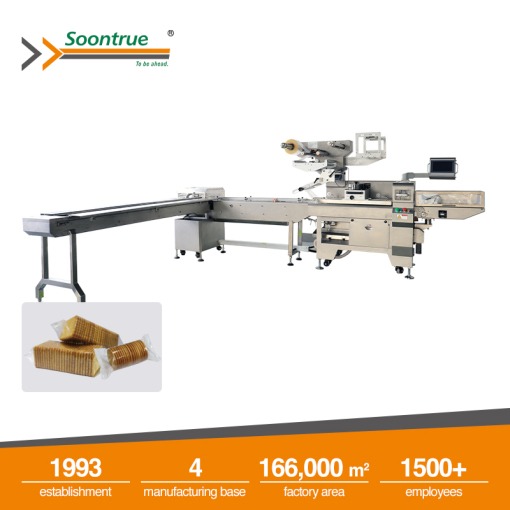
On horizontal packaging machines, product transport, film movement, and the cutting action must be precisely coordinated. Even if the cutting settings remain unchanged, variations in product dimensions or spacing can still affect cutting accuracy. Soontrue offers a variety of horizontal packaging machine configurations to meet diverse production requirements. When recurring cutting issues cannot be resolved through routine inspections, consider the interplay between product infeed, film positioning, and machine operating settings; do not assume that the cutting mechanism is the sole cause of the problem.
A Practical Troubleshooting Workflow for Flow-Pack (Pillow-Pack) Machines
When a defect occurs, avoid changing multiple settings simultaneously. Following a structured troubleshooting workflow helps operators accurately identify the root cause and verify the effectiveness of any adjustments made.
1. Identify the Defect
Determine whether the issue relates to the sealing, film tracking (alignment), or cutting stage. Note when the problem occurs, and establish whether it affects every package or only appears sporadically on individual units.
2. Inspect the Product and Film
Verify that the correct film is being used, and ensure that product dimensions, positioning, and spacing remain consistent. Also, check for debris, moisture, or any other factors that might interfere with the packaging process.
3. Examine Relevant Components
Focus on the components directly associated with the defect. For example, inspect sealing surfaces for issues; check film guides and tension control systems for tracking deviations; or examine positioning and cutting assemblies for inaccuracies.
Always adhere to machine safety protocols before performing inspections or maintenance. Isolate the equipment (power down/stop the machine) when necessary—this is especially critical when working near moving parts or cutting mechanisms.
4. Adjust Only One Variable at a Time
Refer to the machine manual and film specifications. Make only one controlled adjustment at a time, then observe whether the defect changes. Document each adjustment and its outcome so that other team members can refer to these records, preventing the repetition of ineffective attempts.
5. Verify the Results
Conduct a series of test runs under stable operating conditions. Evaluate seal quality, film alignment, cut positioning, and the overall appearance of the packages. If there are specific requirements for product protection, perform appropriate seal-strength or package-integrity tests.
Maintain a concise record of the defects, operating conditions, findings, adjustments made, and test results. Should the issue recur, these records will help determine whether the root cause lies with the materials themselves or with the machine or process.
If the problem persists after routine checks, contact the equipment supplier or a professional technician for further diagnosis. Any subsequent adjustments should follow the manufacturer’s recommendations.
Preventing Recurring Issues in Flow Wrapping
Most flow-wrapping defects can be mitigated through consistent inspection and precise machine calibration. Implementing routine measures helps prevent the recurrence of similar issues.
- Keep sealing and cutting components clean. Regularly remove product residue and inspect both the sealing surfaces and the cutting blades.
- Use appropriate packaging film. The characteristics of the film affect sealing performance, product infeed stability, and cutting quality. Always verify the film specifications before switching packaging materials.
- Document successful parameter settings. Record the temperature, film tension, machine operating speed, and other relevant parameters for each specific product and film type.
- Verify machine performance after product changeovers. Changes in product dimensions or packaging materials may necessitate adjustments to infeed, spacing, and sealing settings.
- Monitor finished packages during production. Regular checks allow operators to promptly identify issues such as poor seals, wrinkles, or cutting errors, preventing the accumulation of defective products.
For production lines that handle multiple products, establishing standardized calibration procedures ensures consistency during changeovers and reduces the need for repeated adjustments.
Conclusion
Defects in the flow-wrapping (pillow-pack) process often stem from issues related to film transport, sealing conditions, product positioning, or synchronization of the cutting mechanism. Identifying the root cause before adjusting machine parameters helps minimize material waste and downtime.
Soontrue can assist you in evaluating and providing the ideal flow-wrapping solution—tailored to your specific products, packaging film, and production line requirements—to ensure more consistent packaging results.
FAQs
Why do flow wrapping defects keep coming back after adjustment?
A defect may return when operators adjust machine settings without identifying its root cause. For example, changing sealing temperature may temporarily improve a weak seal, but worn sealing components, inconsistent film tension, or product residue can still cause problems. Check the relevant components and record successful settings to make troubleshooting more consistent.
How can I reduce packaging waste when troubleshooting a flow wrapper?
Start with a small number of test packages instead of making adjustments during a long production run. Check the film path, sealing quality, product position, and cut accuracy before resuming full-speed operation. Change one parameter at a time so you can identify which adjustment improves the result.
Why do flow wrapping problems appear when production speed increases?
Higher speeds can expose problems that are less noticeable during slower operation. Film feeding, sealing contact time, product spacing, and cutting synchronization may no longer remain consistent. Check whether the machine is operating within its suitable production range and verify package quality at the intended speed.
How do I know whether a flow wrapping defect is caused by the film or the machine?
Look for patterns in the defective packages. If problems begin after changing film materials or roll batches, check film thickness, sealing compatibility, roll installation, and registration marks. If defects continue with a previously verified film, inspect machine alignment, sealing surfaces, feeding components, and cutting synchronization.
When should I stop adjusting the machine and request technical support?
Seek technical support when defects persist after basic checks, settings become difficult to stabilize, or problems involve unusual noise, damaged components, or inconsistent machine movement. Stop the machine before inspecting moving or heated components, following the manufacturer's safety procedures. Provide the supplier with defect photos, film specifications, product details, operating speed, and the adjustments already attempted.