

Paper Napkin Packaging Automation: Collaborative Robot vs Traditional Cartoning Machine
In the competitive paper product and tissue industry, manufacturers are continuously searching for ways to increase production speed, reduce labor reliance, and improve packaging accuracy. Among all automation steps, paper napkin cartoning plays a crucial role because it directly affects downstream logistics, product presentation, and overall output efficiency. As Industry 4.0 evolves, more factories are comparing collaborative robot cartoning machines with traditional mechanical cartoning machines to determine which solution is best suited for their production environment.
This in-depth article compares both technologies in terms of speed, cost, flexibility, maintenance, safety, and long-term ROI—helping you make a strategic, future-ready investment.
Performance and Speed Differences
Traditional cartoning machines are designed for maximum throughput. These systems can achieve very high production speeds, making them ideal for large-scale napkin factories that run 24/7 with little variation in packaging style. If your production line requires extremely high output with consistent, identical carton formats, traditional machines still remain the fastest option.
Collaborative robot (cobot) cartoning machines, however, operate at moderate speeds. While they may not match the highest-output mechanical systems, they offer stability, accuracy, and smooth integration with existing napkin packaging lines. For medium-volume factories or companies producing multiple SKUs, a cobot provides more than enough speed—while delivering efficiency through flexibility.
Flexibility and Adaptability
This is where collaborative robots outperform traditional systems by a wide margin.
Cobots are designed to handle frequent product changes. In many napkin factories, manufacturers produce various pack sizes, bundle types, seasonal SKUs, and private-label orders. A collaborative robot can be reprogrammed quickly to adapt to:
- different carton dimensions
- varied napkin stack heights
- mixed product formats
- promotional packaging bundles
These adjustments take minutes, not hours.
Traditional cartoning machines, on the other hand, require mechanical adjustments, format parts, and skilled technicians for changeovers. Downtime is significant, and the cost rises when switching between packaging formats frequently. For businesses with dynamic product lines, traditional machines create operational bottlenecks.
Safety and Plant Floor Integration
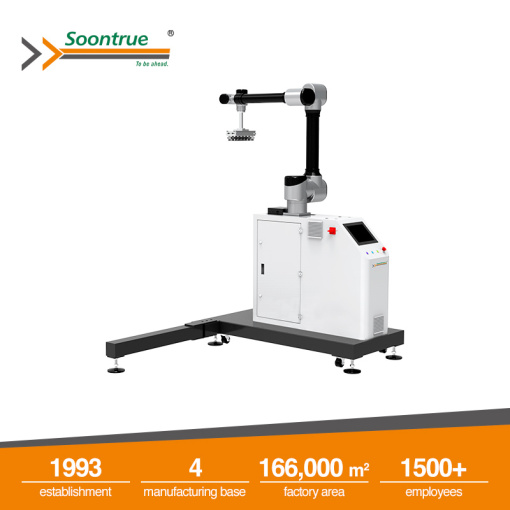
Collaborative robots are built with advanced safety features such as force limitation, collision detection, and restricted-speed operation. These allow cobots to work safely in close proximity to human workers without the need for large protective cages. This is especially valuable for manufacturers with limited factory floor space.
In contrast, traditional cartoning machines require physical guarding, emergency stops, and well-defined operator zones. While safe, they occupy more space and impose stricter workflow separation. For factories aiming for compact, flexible, and human-friendly production layouts, cobots offer a clear advantage.
Cost Efficiency and ROI
Cobots generally involve a lower initial investment compared to full-size, high-speed cartoners. Installation is also simpler because they require minimal structural changes and integrate more easily with existing conveyor systems or napkin packers.
Operating costs are lower as well. Cobots consume less energy, require fewer spare parts, and need minimal specialized maintenance. They are also easier for workers to program and operate, reducing training expenses.
Traditional cartoning machines involve higher capital investment and ongoing maintenance costs. Mechanical systems must be serviced regularly, and parts wear out faster due to continuous high-speed operation. For long, uninterrupted production of identical SKUs, these costs can be justified—but for mixed-production factories, cobot ROI is typically faster and more favorable.
Maintenance and Downtime
Collaborative robot cartoning machines require very little maintenance. They contain fewer moving parts, and their smart control systems offer predictive diagnostics to prevent unplanned downtime. When a manufacturer changes product formats, the changeover process is also fast and simple, resulting in minimal production interruptions.
Traditional cartoning machines require frequent inspection of belts, gluing systems, guides, pushers, and pneumatic components. Changeovers demand physical adjustments and technical expertise. The cumulative downtime is greater—particularly for companies manufacturing a diverse range of paper napkin products.
Scalability and Long-Term Growth
Cobots offer modular scalability. Manufacturers can add more cobots along the packaging line as demand grows, or integrate additional vision systems for even more precise picking and placement. This makes cobot solutions ideal for companies expecting steady growth or changing customer requirements.
Traditional cartoning machines do not scale easily. Increasing capacity often requires replacing the entire system with a faster or larger machine—an expensive and inflexible approach.
Practical Scenarios in Paper Napkin Packaging
A collaborative robot cartoning machine is especially suitable for:
- factories producing multiple napkin sizes
- seasonal or promotional packaging
- private-label orders with frequent format changes
- facilities lacking specialized mechanical technicians
- workshops with limited space
- production lines needing higher flexibility rather than extreme speed
Meanwhile, a traditional cartoning machine is more suitable for:
- extremely high-volume napkin production
- large-scale factories with stable, unchanging carton styles
- long, uninterrupted runs with minimal SKU variation
Both solutions have their strengths, but the growing trend in 2025 and beyond shows an industry-wide shift toward flexible, intelligent automation—led by cobots.
Why More Manufacturers Are Choosing Collaborative Robots
Several market trends are accelerating this shift:
- labor shortages in packaging operations
- increasing customer demand for multiple packaging formats
- rising cost of mechanical maintenance
- growing interest in Industry 4.0 automation
- need for compact, safe, and flexible machinery
- unpredictable order volumes in global markets
Cobots eliminate many of the challenges associated with rigid, high-speed cartoning systems. Their adaptability makes them especially valuable for manufacturers who want to remain competitive and responsive to changing market conditions.
Recommended Solution: Soontrue Collaborative Robot Cartoning Machine
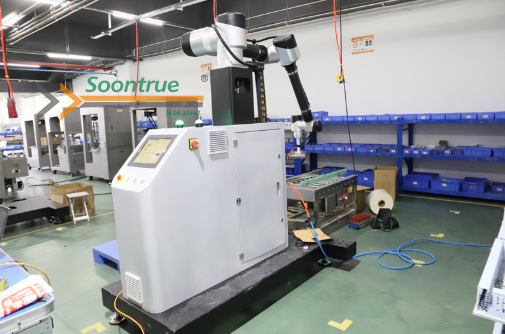
If you are considering upgrading your packaging automation, the Soontrue collaborative robot cartoning machine is a strong and reliable option specifically designed for the tissue and paper napkin industry.
Soontrue's solution stands out for several reasons:
- Intelligent vision-guided pick-and-place technology
- Smooth and stable cartoning performance
- Quick and tool-free changeovers
- Compact footprint suitable for small or medium factories
- Seamless integration with Soontrue napkin folding and packaging lines
- Minimal maintenance and significantly reduced downtime
Factories that adopt Soontrue's cobot cartoning system often experience measurable improvements in labor savings, packaging consistency, and production flexibility. For manufacturers preparing for long-term growth or looking to modernize their packaging lines, Soontrue offers an automation solution that is both reliable and future ready.
Conclusion
Choosing between a collaborative robot cartoning machine and a traditional cartoning machine depends on your factory's production goals:
- If you need maximum speed and uniform production, a traditional machine remains the fastest.
- If you value flexibility, fast changeover, lower costs, smaller footprint, and easier operation, a collaborative robot cartoning machine is the better choice.
As the global paper napkin market continues to diversify, the advantage increasingly shifts toward cobot-driven automation, especially for manufacturers that handle multiple SKUs or operate in dynamic markets. For those seeking a stable, efficient, and intelligent solution, Soontrue's collaborative robot cartoning machine offers the ideal balance of performance, reliability, and flexibility.