

Reducing Labor Costs with Automatic Packaging
Food processing plants today operate under intense pressure to sustain high production volumes while effectively managing operational expenses. Rising labor shortages, escalating wage levels, and persistent challenges with employee turnover create significant hurdles for manufacturers in the food sector. To address these issues, many forward-thinking facilities turn to advanced automation technologies. Horizontal packaging systems and automatic pillow packing machines stand out as highly effective solutions. These systems provide substantial improvements in efficiency, consistency, and cost control across diverse segments including bakery products, confectionery, frozen foods, snacks, and ready-to-eat items.
The Growing Need for Automation in Food Manufacturing
Traditional food production lines depend heavily on manual processes for multiple stages including material feeding, precise weighing, bag forming, filling, sealing, date coding, and final case packing. Each of these steps demands considerable manpower and often results in variations in operational speed, product quality, and overall output consistency. As market demands grow and labor availability tightens, manufacturers increasingly adopt integrated packaging equipment that combines several functions into one continuous, streamlined workflow. This transition from labor-intensive methods to smart automation allows plants to boost throughput significantly while maintaining strict quality standards.
Soontrue Machinery, founded in 1993, has accumulated over thirty years of specialized expertise in packaging machinery development and manufacturing. With four advanced production bases located in Foshan, Shanghai, Chengdu, and Jiaxing, the company maintains a total facility area of approximately 166,000 square meters. This extensive manufacturing infrastructure enables the production of high-quality equipment and supports the delivery of complete end-of-line automation solutions specifically designed to meet the unique requirements of the modern food processing industry.
How Automatic Pillow Packing Machines Streamline Operations
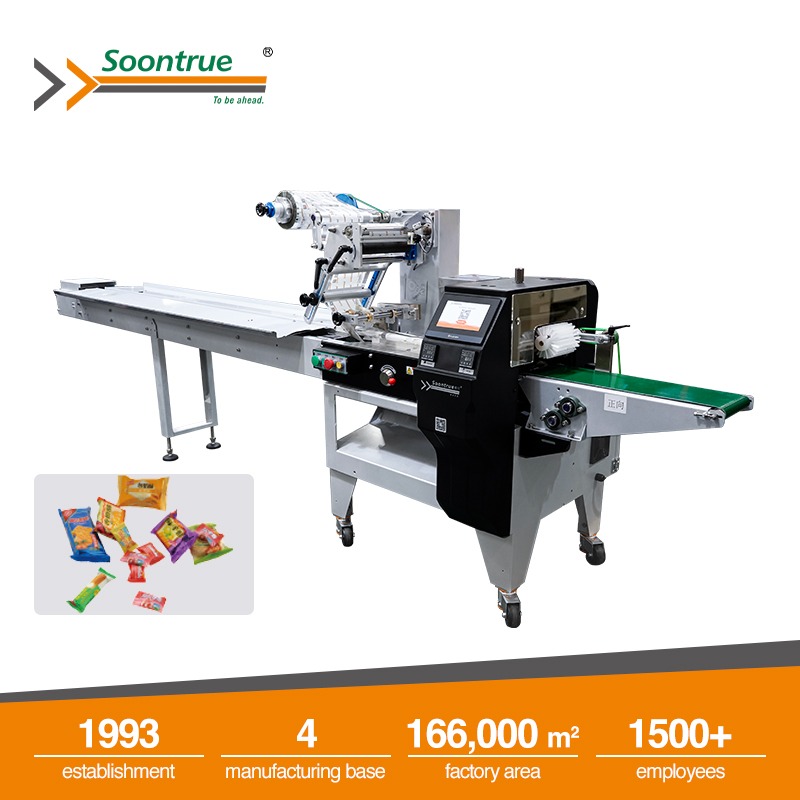
Automatic pillow packing machines perform multiple critical processes within a single unit: automated product feeding, film unwinding and forming, accurate filling, secure sealing, and precise cutting. By consolidating these operations, the machines dramatically decrease the number of workers required for each production line. Instead of assigning several employees to separate manual stations, a single integrated system handles the entire packaging sequence. This shift frees up personnel to concentrate on higher-value supervisory and quality control responsibilities rather than repetitive physical tasks.
Full Servo Control for Enhanced Performance
Advanced models featuring full servo motor control, such as the SZ3000 series, offer exceptional precision in managing film movement, sealing actions, and product positioning. Operators can execute rapid format changeovers directly through intuitive touchscreen interfaces, which significantly reduces downtime when switching between different product types or package sizes. Sophisticated real-time monitoring capabilities continuously track operational parameters and generate immediate alerts for conditions such as low film supply, sealing abnormalities, or mechanical issues. Consequently, one skilled technician can effectively oversee multiple production lines simultaneously, maximizing workforce productivity.
Precision That Eliminates Variability
The automated nature of these machines ensures uniform sealing strength, accurate coding placement, and consistent package appearance across every unit produced. Precise temperature regulation combined with controlled pressure application creates reliable, airtight seals that effectively preserve product freshness and visual appeal. Such consistency becomes especially important in large-scale production environments where manual packaging frequently leads to variations that affect product shelf life and customer satisfaction.
Advancing Toward Complete End-of-Line Automation
While individual wrapping machines deliver strong benefits, true operational transformation occurs when facilities implement fully integrated end-of-line systems. These comprehensive setups connect packaging equipment with both upstream production processes and downstream handling operations to create smooth, continuous material flow.
Automated Material Handling Systems
Collaborative robots, servo-driven pushing mechanisms, and intelligent conveyor systems efficiently transfer products from processing lines directly to packaging infeed areas. Automatic tray dispensers and specialized feeders—including sinking type, drop-down, and side-sorting configurations—accommodate products of varying shapes, sizes, and textures. These customized solutions effectively eliminate time-consuming manual loading procedures and substantially reduce physical demands placed on workers, contributing to improved workplace safety and lower fatigue-related issues.
Robotic Solutions at the Final Stages
At the conclusion of the packaging line, robotic case packers and automatic palletizers manage the demanding tasks of case loading, sealing, and pallet stacking. These systems maintain continuous operation with minimal human intervention while ensuring uniform pallet configurations optimized for transportation and storage. By removing heavy manual lifting and repetitive end-of-line handling, facilities not only cut labor requirements but also decrease the risk of workplace injuries.
Addressing Specific Challenges in Food Packaging
Food manufacturers frequently handle delicate and sensitive products that demand gentle treatment throughout the packaging process to preserve appearance and quality.
Gentle Packaging for Fragile Goods
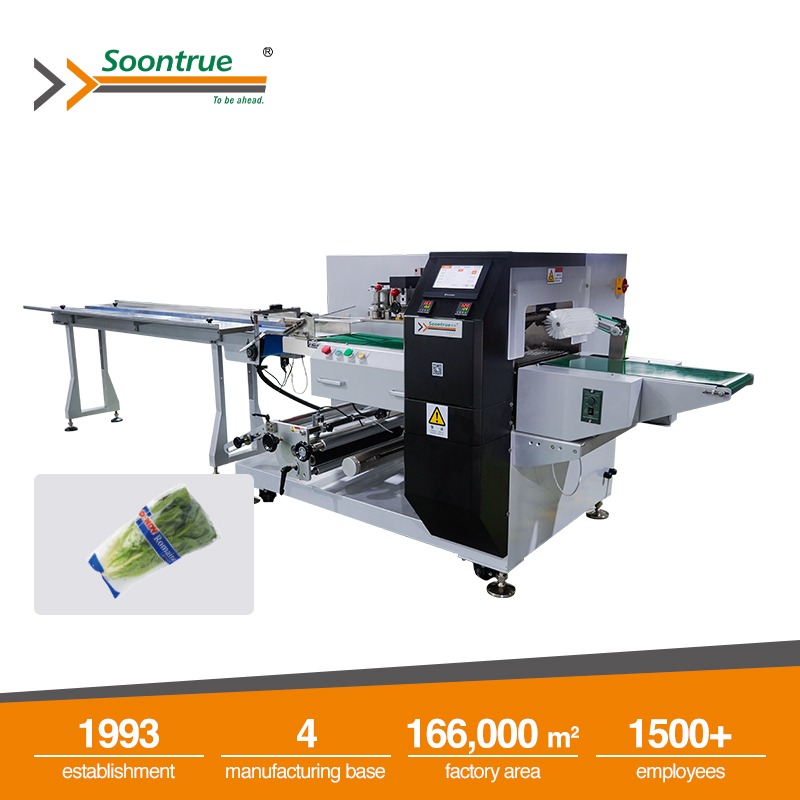
Box motion sealing technology, incorporated in models such as the SW280X, employs smooth, controlled horizontal movements that minimize abrupt mechanical impacts even at high operating speeds. This gentle approach significantly reduces product damage and rejection rates for fragile items including wafers, biscuits, frozen dumplings, and other delicate bakery or frozen food products.
Hygiene and Food Safety Benefits
Automation inherently decreases direct human contact with food products during packaging, which strengthens compliance with stringent food safety regulations and hygiene standards. This reduction in exposure points helps bakery and frozen food producers maintain the highest levels of product safety and quality assurance.
Accurate Weighing Integration
When combined with multihead weighing systems, horizontal packing machines overcome the traditional limitations of manual weighing methods, which typically suffer from slower speeds and lower accuracy. The integrated approach achieves superior weighing precision while sustaining rapid production rates essential for high-volume operations.
On-Edge Packaging for Specific Products
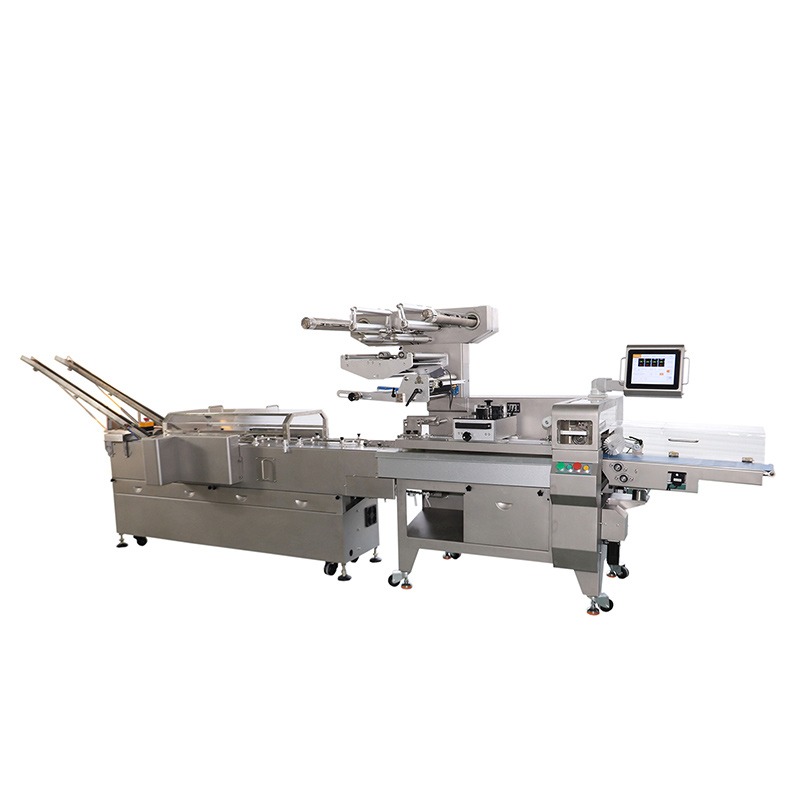
Certain products, particularly biscuits and crackers, benefit from specialized on-edge packing solutions. Machines like the SI-150 utilize multi-servo control to deliver stable, efficient trayless packaging that maintains product alignment and presentation.
Factors to Consider When Choosing a Packaging Partner
When evaluating potential suppliers, manufacturing scale and production capabilities play crucial roles in determining long-term equipment reliability and customization flexibility. Organizations that maintain large, well-organized facilities and implement systematic management approaches such as 5S methodology consistently deliver machinery built for durability and dependable performance over extended operational periods.
Comprehensive global technical support, thorough operator training programs, and responsive after-sales service networks further enhance the value of any automation investment. These support elements help manufacturing facilities achieve maximum equipment uptime, resolve technical challenges promptly, and successfully adapt systems as production requirements change over time.
Conclusion
Initial investment in automatic pillow packing systems delivers strong long-term returns through significant labor savings, reduced product waste, and improved operational efficiency. Soontrue provides tailored packaging solutions backed by decades of expertise and reliable global support. Food processors ready to enhance competitiveness can contact Soontrue experts for customized automation recommendations.
FAQs
Q: How much can automatic pillow packing machines reduce labor costs?
A: Automatic horizontal packing systems typically replace 6–10 manual workers per line, depending on speed and configuration. Facilities often achieve 50-70% labor cost reductions by consolidating feeding, weighing, forming, filling, and sealing into one machine while enabling one operator to supervise multiple lines.
Q: What is the typical ROI timeline for investing in horizontal flow wrapping equipment?
A: Most food manufacturers recover their investment within 12–24 months through combined savings in labor, reduced product waste, lower rework rates, and increased throughput. Higher-volume operations see even faster payback periods.
Q: Are these machines suitable for small to medium-sized food processors?
A: Yes. Compact models with user-friendly interfaces and quick changeover capabilities work well for smaller facilities. They scale efficiently as production grows without requiring proportional increases in staffing.
Q: How do automatic packaging systems improve food safety and hygiene?
A: By minimizing direct human contact with products, automated lines reduce contamination risks and support compliance with strict regulatory standards in bakery, confectionery, and frozen food sectors.
Q: What types of products work best with pillow packing machines?
A: Regular solid items such as biscuits, wafers, frozen dumplings, candies, and snack bars perform excellently. Specialized models with box motion technology handle delicate or sticky products gently at high speeds.
Q: How long does operator training take for these systems?
A: Most operators become proficient within 1–3 days thanks to intuitive touchscreen controls and built-in diagnostic features. Comprehensive training and ongoing support from suppliers further accelerate adoption.