

Shrimp Processing Line Equipment: How to Choose the Right Solution
Buying shrimp processing equipment is not simply about finding a machine with a higher output. The real challenge is matching each processing stage with the next one. For a commercial shrimp processor, a well-planned line can make production more consistent, reduce manual handling, and leave room for future expansion.
This guide focuses on how to plan the equipment around your actual shrimp processing workflow.
Start With the Process, Not the Machine
A common mistake when planning a shrimp processing project is to start by comparing machine models.
A better starting point is the product flow:
Raw Shrimp → Deheading → Peeling → Deveining → Washing/Sorting → Conveying → Packaging
Not every factory needs every stage. A processor selling headless shell-on shrimp may need a very different configuration from a factory producing peeled and deveined frozen shrimp.
The equipment should therefore be selected after defining the finished product.
What Needs to Be Defined First?
Before discussing specific machines, answer four questions:
|
Requirement |
Why It Matters |
|
Shrimp size |
Affects machine suitability and processing performance |
|
Finished product |
Determines which processing stages are required |
|
Target capacity |
Determines the required equipment configuration |
|
Automation level |
Determines feeding, conveying, and line integration |
This approach avoids purchasing equipment that solves only one part of the production problem.
Build the Processing Line Around the Finished Product
Different finished products require different process flows.
For example, a factory producing peeled and deveined shrimp may need:
Raw Shrimp → Deheading → Peeling & Deveining → Sorting → Packaging
Another operation may only need automatic deheading before sending shrimp to another processing stage.
The important point is that shrimp processing equipment should follow the production requirement rather than the other way around.
Deheading: Where the Line Begins
Deheading is one of the first opportunities to reduce repetitive manual work.
Soontrue's SDL100A Automatic Shrimp Deheading Processing Line is designed to combine feeding, deheading, washing, sorting, and collecting into an automated workflow. This makes it more relevant to processors looking beyond a single machine and planning a continuous process.
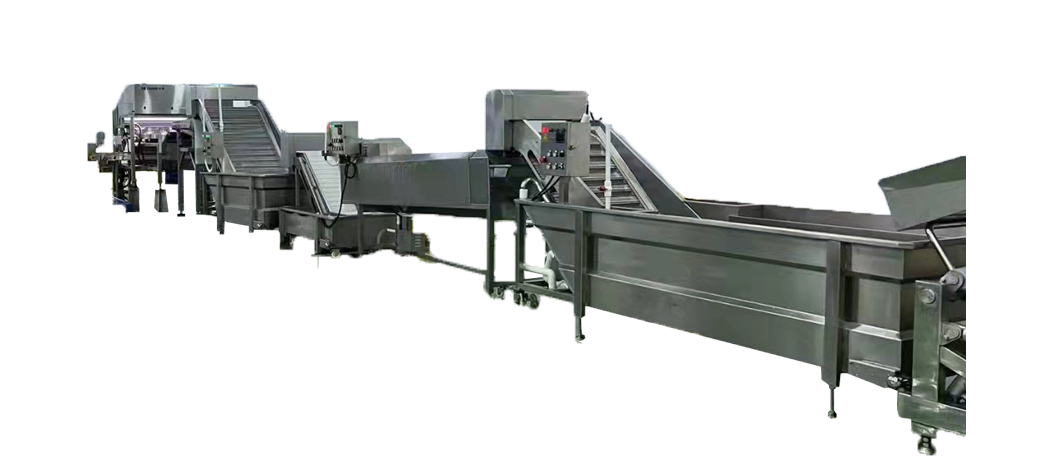
Peeling and Deveining: A More Demanding Stage
Peeling and deveining require closer attention to shrimp size and product characteristics.
Soontrue's HB320 Shrimp Peeling and Deveining Machine is designed for automatic peeling and deveining and supports multiple shrimp size ranges. The machine uses servo-driven control and an HMI interface, while feeding and conveying equipment can be configured around the processing requirements.
For this stage, actual shrimp samples are valuable because performance can vary with shrimp size, condition, and processing requirements.
How Much Automation Does Your Factory Actually Need?
A fully automated line is not automatically the right answer for every processor.
Consider the difference:
|
Production Situation |
Practical Approach |
|
Small volume or one processing stage |
Standalone machine |
|
Growing production |
Several automated stages |
|
High-volume commercial processing |
Integrated processing line |
|
Processing + packaging expansion |
Connected processing and packaging system |
For a smaller processor, automating the most labor-intensive stage may provide the best starting point.
For a larger factory, however, isolated machines can create new manual transfer points. In that case, feeding, conveying, processing, and downstream packaging should be considered together.
The Hidden Bottleneck: Product Transfer
Processing speed is only one part of line performance.
Imagine a peeling machine capable of handling a high volume of shrimp, but operators still need to manually move product between the peeling and packaging areas. The machine may be fast, but the production line is not.
This is why conveyors, feeders, buffers, and product transfer points deserve attention during line planning.
A useful production-line review should ask:
Where does the product stop?
Where does an operator have to intervene?
Where can products accumulate?
What happens if an upstream machine temporarily stops?
These questions are often more useful than simply comparing machine speeds.
Choosing Shrimp Processing Equipment: Five Decisions That Matter
1. Match the Machine to Your Shrimp
Shrimp size and condition directly influence equipment selection.
Before requesting a quotation, provide:
- Shrimp size range
- Head-on or headless condition
- Fresh or frozen condition
- Desired peeling style
- Tail-on or tail-off requirements
- Finished product specifications
Do not assume that a machine suitable for one shrimp specification will automatically deliver the same result with another.
2. Calculate Capacity From the Whole Line
Do not calculate capacity from one machine alone.
If the peeling stage can process more shrimp than the downstream sorting or packaging stage, the bottleneck simply moves further down the line.
A better calculation considers:
Raw Material Input → Processing Capacity → Inspection/Sorting → Packaging Capacity
The target should be a balanced line rather than the highest possible speed at one individual stage.
3. Consider Labor Where It Matters Most
Labor savings are important, but the goal is not simply to remove operators.
Automation can also move workers away from repetitive processing and toward:
Feeding supervision
Quality inspection
Machine monitoring
Sanitation
Production management
This can create a more predictable production environment.
4. Check the Existing Factory Layout
A good machine can still become a poor investment if it does not fit the production environment.
Review:
- Available floor space
- Product flow direction
- Existing conveyors
- Cleaning requirements
- Electrical requirements
- Distance between processing stages
- Connection with packaging equipment
The layout should be considered before finalizing the machine configuration.
5. Leave Room for Expansion
If production is expected to grow, consider modular expansion from the beginning.
For example, a factory may initially automate peeling and later add:
Sorting → Conveying → Packaging → Case Packing
This can be more practical than replacing the entire line when production increases.
Standalone Equipment or Complete Shrimp Processing Line?
There is no universal answer.
A standalone machine may be the better choice when a processor has one clear labor bottleneck. A complete line becomes more attractive when the factory is dealing with high volume, multiple processing stages, or significant manual handling between machines.
|
Consideration |
Standalone Equipment |
Integrated Line |
|
Initial investment |
Lower |
Higher |
|
Installation |
Simpler |
More involved |
|
Flexibility |
Good for one stage |
Good for complete workflow |
|
Manual handling |
More likely |
Can be reduced |
|
Expansion |
Modular |
Planned from the beginning |
|
Best suited to |
Specific bottleneck |
Commercial production |
The right choice depends on where the current production problem actually exists.
Connecting Shrimp Processing With Packaging
Processing does not end when the shrimp is peeled.
For factories producing ready-to-pack or frozen shrimp products, the transition from processing to packaging can become another bottleneck.
A broader workflow could look like:
Shrimp Processing → Inspection → Portioning → Primary Packaging → Cartoning → Case Packing
This is where Soontrue's broader packaging capabilities become relevant.
The company provides horizontal flow packaging, vertical packaging, cartoning, case packing, and end-of-line automation alongside shrimp processing equipment. This allows processors to consider the relationship between upstream processing and downstream packaging rather than treating them as completely separate projects.
For factories working with seafood and frozen foods, Soontrue also presents integrated fresh and frozen food packaging solutions.
What Should You Ask a Shrimp Processing Equipment Manufacturer?
Instead of asking only:
“What is the price of your shrimp peeling machine?”
A more useful inquiry includes the production details.
|
Information |
Example |
|
Shrimp size |
31/40, 41/50, etc. |
|
Raw material |
Fresh / frozen |
|
Finished product |
Peeled & deveined |
|
Capacity |
kg/hour |
|
Processing stages |
Deheading + peeling + deveining |
|
Existing equipment |
Conveyor / packaging machine |
|
Automation |
Standalone / integrated |
|
Factory information |
Layout or production flow |
This gives the manufacturer enough information to recommend equipment based on the actual application.
Soontrue Shrimp Processing Equipment
Soontrue currently provides shrimp processing equipment including the HB320 shrimp peeling and deveining machine and SDL100A automatic shrimp deheading processing line.
The stronger value proposition is not simply the availability of individual machines. Soontrue's wider portfolio allows shrimp processing to be considered alongside food packaging and downstream automation.
For a processor planning a new line, this means the discussion can start from the production workflow rather than one machine model.
Conclusion
The best shrimp processing equipment is the equipment that fits the entire production flow, not simply the machine with the highest individual capacity. Define your shrimp, finished product, capacity, processing stages, and future plans first. Send Soontrue your shrimp specifications and production requirements to discuss the right processing and packaging configuration for your factory.
FAQs
What equipment is needed for a commercial shrimp processing line?
It depends on the finished product. A line may include deheading, peeling, deveining, sorting, conveying, and packaging equipment. The required configuration should be based on shrimp specifications and target production.
Is a complete shrimp processing line better than individual machines?
Not always. Individual machines can be more practical when a factory needs to automate one specific bottleneck. A complete line is more appropriate when multiple processing stages need to work together.
How do I choose a shrimp peeling machine?
Start with shrimp size, product condition, desired peeling style, target capacity, and finished product requirements. Product testing is also useful when shrimp specifications vary.
Can shrimp processing equipment be connected to packaging equipment?
Yes, depending on the project. Processing, conveying, primary packaging, cartoning, and end-of-line automation can be considered as part of a broader production system.
What information should I send when requesting a shrimp processing machine?
Provide shrimp size, raw material condition, finished product requirements, target capacity, processing stages, existing equipment, and product photos or samples.
Can Soontrue help plan a complete shrimp processing solution?
Soontrue offers individual shrimp processing equipment as well as broader food packaging and automation capabilities. The appropriate configuration depends on the product, capacity, factory layout, and required processing stages.